“Votem All Out”
Only Way: “Save Democracy Now”
Reclaim American Dream in 2026
Bi-partisan Movement
By William E. Bardwell, MBA, validatingtruth@gmail.com
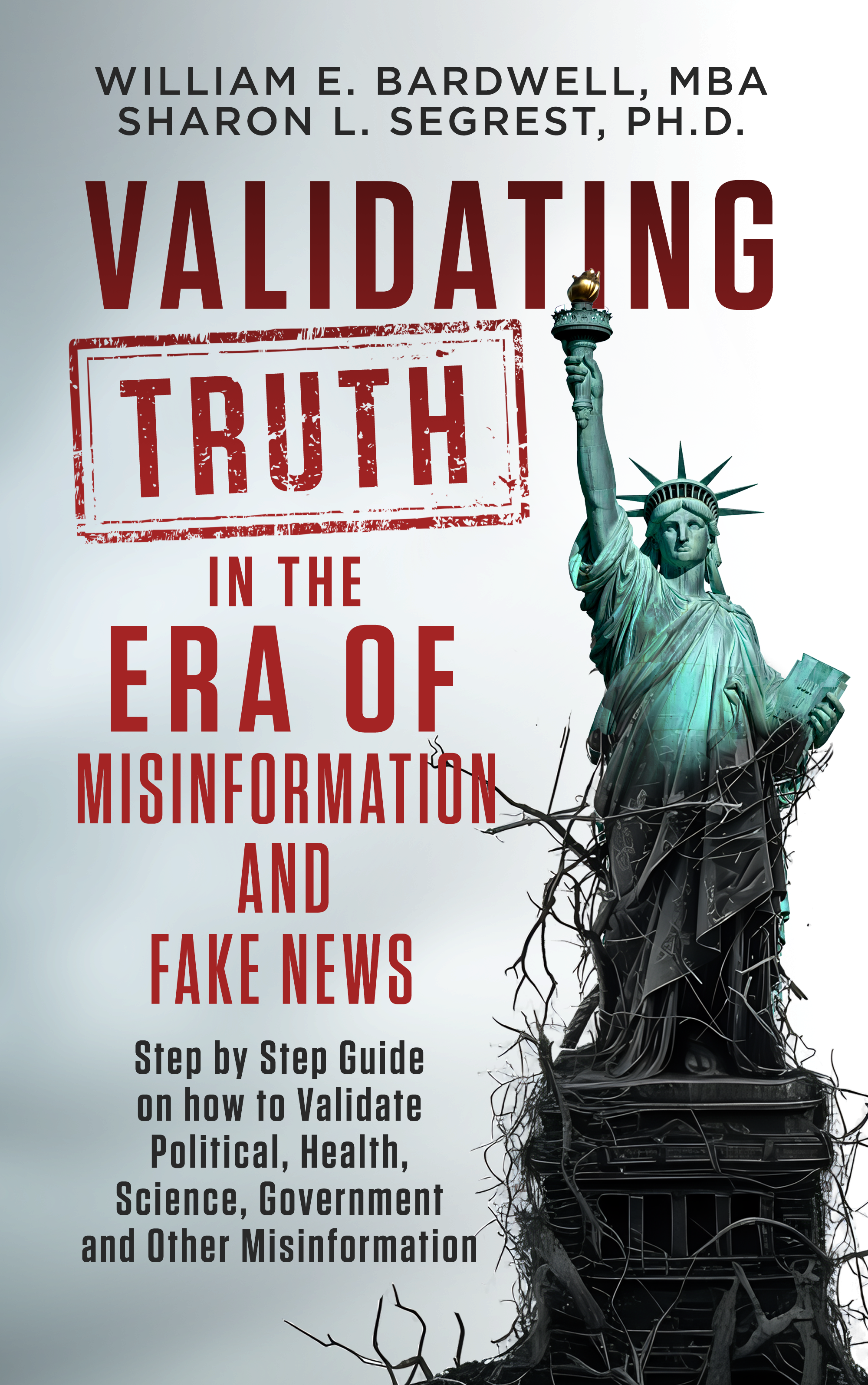
Co-author: “Validating Truth in the Era of Misinformation and Fake News
Our Democracy Has Been Sold Out. Here’s How We Win It Back
How Democracy Is Being Threatened — And Why It Matters
Understanding how and why our democracy is at risk is critical for every American. By exploring the differences between democracy and authoritarianism, and the role of Congress, we can see why protecting democratic institutions matters now more than ever.
What Is a Democracy?
A healthy democracy is built on:
Government authority from the people
Free and fair elections
Majority rule with minority protections
Freedom of speech, press, religion, and assembly
Rule of law and independent judiciary
Accountability of elected officials
In a democracy, citizens have real power to choose leaders and hold them accountable.
What Is Authoritarianism?
Authoritarian governments concentrate power and limit freedoms:
Weak or manipulated elections
Suppression of opposition parties
Restricted speech, press, religion, and assembly
State-controlled media
Governance by executive orders
Lack of judicial independence
Use of fear or security forces to maintain control
Limited accountability to the public
Understanding these characteristics helps citizens recognize threats to democracy.
The Roles of Congress
Congress is a cornerstone of American democracy, responsible for:
Passing laws and controlling government spending
Oversight of the Executive Branch
Confirming appointments and approving treaties
Exercising impeachment power
Declaring war
Proposing constitutional amendments
A strong, independent Congress prevents power from concentrating in a single branch and ensures government remains accountable to the people.
Key Questions for Americans Today
This framework sets the stage for understanding the biggest threats to our democracy:
How and why has money influenced Congress?
How has this influence contributed to America’s affordability crisis?
How did Donald Trump win the 2024 election?
What steps has the Government taken to transition to Authoritarianism?
How can Americans protect and save democracy?
Understanding these issues is the first step toward informed civic engagement and safeguarding the future of American democracy.
1. Why and How Has Money Influenced Congress?
The Hidden Driver Behind America’s Affordability Crisis
Why are so many Americans struggling to pay their bills?
It’s not just inflation or economic cycles. Over the past 45 years, a deeper force has reshaped the economy:
Money has reshaped Congress—and Congress has reshaped the economy.
As corporate influence has grown, wages have lagged behind productivity, while everyday costs have continued to rise. Policies like tariffs—effectively taxes on consumers—have added even more pressure on working families.
Turning Point #1: 1980 — The Shift of Manufacturing to China
The move of U.S. manufacturing to China wasn’t a single decision—it was the result of policy, profit incentives, and lobbying aligning over time.
Leaders like Richard Nixon and Henry Kissinger opened the door diplomatically. Bill Clinton advanced trade integration. Figures like Dianne Feinstein supported engagement in Congress, while investors like Richard Blum participated in the expanding global economy.
But they didn’t “move” manufacturing.
Corporations did—driven by profit—and then lobbied Congress to make it easier.
China created powerful incentives: low labor costs, tax advantages, and modern supply chains. U.S. corporations responded by shifting production to China—and pushed for policies like trade normalization and China’s entry into the World Trade Organization to support it.
The Results:
Pros:
· Lower prices for goods like clothing, electronics, and household items
· Higher corporate profits and stronger stock markets
Cons:
· Loss of ~7 million manufacturing jobs
· Economic decline in industrial regions
· Rising wage and wealth inequality
· Growing dependence on foreign supply chains
Turning Point #2: 2010 — Citizens United v. FEC
Before 2010, limits existed on political spending by corporations and unions. That changed with Citizens United.
The ruling allowed unlimited independent political spending by corporations, lobbyists, and wealthy individuals.
What changed:
· Billions in outside money flooded elections
· Super PACs and “dark money” groups expanded rapidly
· Transparency declined
· Wealthy and Corporate donors gained greater influence over policy and access
The Bottom Line
Over time, these forces have transformed Congress:
From representing voters → to responding increasingly to money.
And that shift has had real consequences:
· Wages disconnected from productivity
· Rising costs for working families
· Policies that often prioritize economic power over public needs
The Cost of Staying in Office
Running for Congress is now extraordinarily expensive.
In the 2024 election cycle:
The average House incumbent needed to raise roughly $713,000.
The average Senator needed about $2.2 million.
Most of this money did not come from ordinary voters.
It came from:
Political Action Committees (PACs)
Corporate interests
Lobbyists
Billionaires
Party fundraising networks
These contributors do not donate out of charity. They expect access, influence, and favorable treatment.
The Legislative Impact
Over the past 15 years, critics argue that Congress has increasingly passed legislation that:
Benefits corporations and large donors
Prioritizes tax advantages for wealthy interests
Protects industry advantages
Weakens regulatory oversight
Fails to address affordability for working families
As reelection funding has become more dependent on major donors, legislative priorities have shifted accordingly.
The result: growing public frustration, political gridlock, and declining trust in government.
2. How Did the Influence of Money in Congress Create America’s Affordability Crisis?
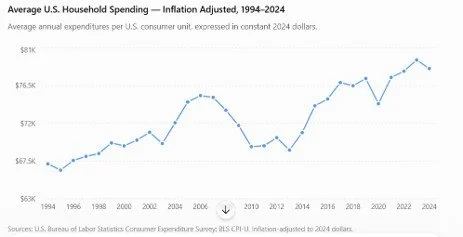
Over the past 15+ years, millions of Americans have found it harder to pay their bills and maintain their standard of living.
While inflation, economic shocks, and global events are often blamed, many critics argue that a deeper structural issue has contributed to the problem:
The growing influence of money in Congress has shaped policies that favored corporations and wealthy interests — while everyday costs continued to rise.
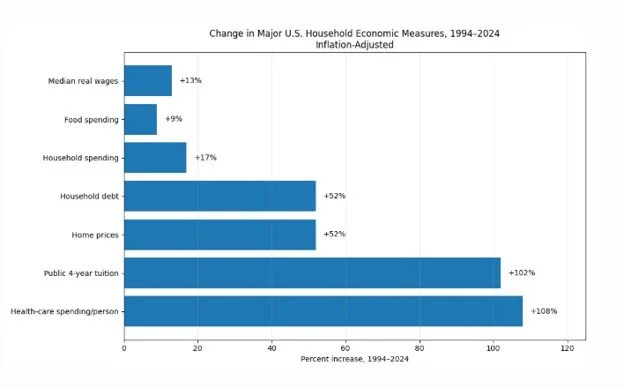
Wages Stagnated While Costs Soared
For most workers:
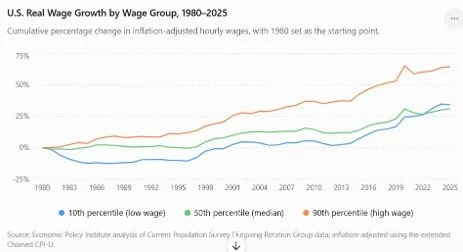
Wages did not keep pace with inflation.
Income growth lagged behind productivity gains.
The top 1% saw income growth far outpace the bottom 90%.
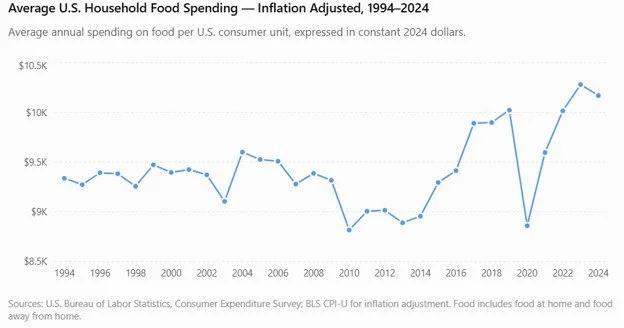
At the same time, essential costs rose dramatically.
Result: Even full-time workers struggle to cover basic living expenses.
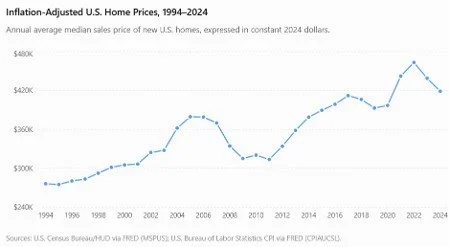
Housing Costs Skyrocketed
Rent and home prices increased far faster than income in many cities.
Housing often consumes the largest share of household budgets.
Families are left with less for food, healthcare, transportation, and savings.
High housing costs alone can destabilize middle-income households.
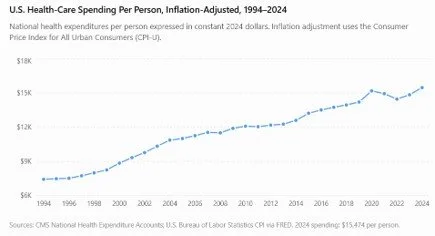
Healthcare Became Increasingly Expensive
Insurance premiums and out-of-pocket costs continued rising.
Prescription drug prices climbed.
Unexpected medical bills pushed families into debt.
Critics argue Congress could have more aggressively pursued reforms such as expanded drug price negotiation, stronger antitrust enforcement, payment reform, and standardized billing to reduce industry waste.
Childcare and Education Costs Climbed
Childcare often rivals rent in monthly cost.
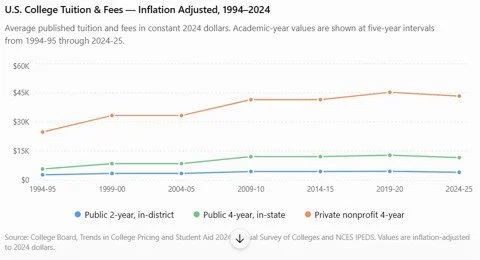
College tuition and student loans burden millions.
Young families face difficult financial trade-offs.
These pressures make saving, investing, and building long-term stability more difficult.
Household Debt Expanded
Credit card balances rose.
Student and auto loans increased.
Monthly debt payments reduced disposable income.
Debt adds financial stress and limits upward mobility.
Job Quality and Economic Inequality
Much job growth occurred in:
Lower-wage positions
Gig or contract work
Jobs without benefits or security
Meanwhile, corporate profits and stock valuations surged — disproportionately benefiting wealthier households.
Economic Shocks Raised Prices — But Not Always Lowered Them
The 2008 financial crisis, pandemic disruptions, supply chain issues, and inflation spikes pushed costs higher.
In many sectors, prices remained elevated even after crisis conditions eased.
Corporate-Focused Legislative Trends
Over the past 15 years, Congress passed policies that critics say favored large corporations, including:
Favorable tax treatment (accelerated depreciation, R&D credits, offshore profit shifting)
Deregulation in key industries
Subsidies and industry-specific credits
Corporate bailouts with limited executive accountability
Tax policies favoring investment income over wages
Reduced support for unionization
These policies coincided with increased corporate pricing power in sectors such as housing, healthcare, and pharmaceuticals.
Weak Antitrust Enforcement and Market Concentration
Federal antitrust laws such as the
Sherman Antitrust Act, Clayton Antitrust Act, and Federal Trade Commission Act.
are designed to prevent monopolies, protect consumers, stop price fixing and collusion, and preserve competitive markets
Critics argue that insufficient enforcement allowed industries — especially healthcare — to consolidate, reducing competition and contributing to higher prices.
The Bottom Line
Many Americans are struggling because:
Essential costs have risen faster than wages.
Household debt has increased.
Income inequality has widened.
Corporate market power has expanded.
For many households, affordability is no longer just an economic issue — it is a governance issue.
The question is not simply why prices are high.
The deeper question is whether public policy has prioritized concentrated wealth over broad economic stability.
3. How Donald Trump Won the 2024 Election
Messaging, Money, and the Expansion of Presidential Power
1. Campaign Messaging That Resonated
In the 2024 election, Donald Trump built a campaign centered on economic frustration, distrust of institutions, and national identity.
He argued that:
President Biden was responsible for high inflation and rising living costs.
The previous election had been stolen.
Immigration was increasing crime, taking American jobs and costing taxpayer dollars.
He would “drain the swamp” and eliminate government corruption.
He could end foreign conflicts quickly, including the war in Ukraine and tensions in the Middle East.
These messages connected with voters struggling to afford housing, groceries, and energy — and with those who felt ignored by Washington.
2. Promises vs. Outcomes (As of Early 2026)
Economy & National Debt
Promised to cut federal spending by $2 trillion and reduce the national debt.
Federal borrowing instead increased by trillions.
Inflation & Cost of Living
Promised to “end inflation” and sharply reduce everyday prices.
Inflation fluctuated, but there was no dramatic collapse in prices tied directly to new policy changes.
Manufacturing & Infrastructure
Promised a revival of American industry and millions of new jobs.
No large-scale new infrastructure program or measurable manufacturing boom has emerged.
Healthcare & Social Policy
Promised sweeping healthcare reforms and national policy changes.
Large systemic reforms have not passed Congress.
Foreign Policy
Promised to end the Ukraine war within 24 hours.
The war continues, and U.S. involvement remains.
Promised Middle East stability; regional tensions remain elevated.
Immigration
Promised the largest deportation operation in U.S. history.
Enforcement increased, but deportations have not reached the scale promised.
Rather than deporting the “worst of the worst”, people who has committed crimes, the administration’s mass deportation plan is to remove as many brown-skinned immigrants from the country as possible, undocumented or otherwise by masked agents toting military grade weapons and attire.
3. The Role of Big Money After Citizens United
The 2010 Supreme Court decision in Citizens United v. FEC transformed U.S. elections by allowing unlimited independent political spending by corporations and wealthy individuals.
Remember what Changed After 2010.
Super PACs could raise and spend unlimited funds.
Dark money groups expanded, reducing donor transparency.
Billionaires and large donors gained disproportionate influence.
In the 2024 election cycle:
Dark money spending exceeded $1 billion.
Billionaire families spent an estimated $2.6 billion influencing federal races.
The top 1% of donors accounted for roughly half of all political contributions.
This financial environment amplified Trump’s campaign messaging through independent advertising, digital outreach, and voter mobilization operations.
How Big Money has expanded Presidential Power
Campaign finance does more than influence elections — it reshapes governing power.
When massive fundraising networks surround a presidency:
Political leverage increases over allies and opponents.
Major donors may gain access or policy influence.
Party agendas often align with major funding networks.
Incumbents benefit from structural financial advantages.
Legislative negotiations can be shaped by donor priorities.
While money does not change constitutional authority, it expands informal political power — particularly for presidents supported by strong wealthy-donor networks.
Conclusion
Donald Trump’s 2024 victory was shaped by:
Effective populist messaging.
Voter frustration over inflation, immigration and wage inequality.
A post–Citizens United campaign finance system enabling unlimited outside spending.
Concentrated financial backing from wealthy donors and super PAC networks.
The combination of narrative influence and financial power helped shape both the electoral outcome and the broader balance of power in Washington.
4. What steps has the Government taken to transition our government to Authoritarianism?
Concerns about democracy backsliding in the United States often center on rhetoric, institutional norms, and the balance of powers. Below is an expanded, fact-based overview of issues critics raise when discussing potential movement toward authoritarian governance.
1. Admiration for Strongman Leaders
President Donald Trump has publicly expressed praise at various times for foreign leaders known for centralized power, including Vladimir Putin of Russia and Viktor Orbán of Hungary.
Critics argue that rhetorical admiration for leaders who govern with weakened institutional checks and constrained media freedom can signal tolerance for more centralized executive authority. Supporters counter that such remarks are diplomatic positioning rather than endorsement of governing style.
2. Statements About Executive Power
President Trump has, at times, used provocative language about being a “dictator” (often described by supporters as hyperbolic or humorous) and has emphasized the use of executive orders to implement policy.
Executive orders are a lawful tool of presidential authority, used by presidents of both parties. However, critics argue that heavy reliance on executive action—particularly when Congress is bypassed—can contribute to expanded presidential power and weakened legislative oversight. The long-term concern is structural: when Congress becomes less central to policymaking, the balance envisioned in the Constitution shifts.
3. Claims of Election Fraud
President Trump has repeatedly stated that the 2020 presidential election was “stolen” and has asserted widespread fraud despite court rulings and state-level audits finding no evidence sufficient to overturn results.
Persistent claims that elections lack integrity can have significant democratic consequences:
Erosion of public trust in electoral systems
Increased political polarization
Heightened risk of civil unrest
Pressure on state and local election officials
A core feature of democratic governance is public acceptance of verified election outcomes—even when candidates lose.
4. Rhetoric Toward Political Opponents and the Media
Critics point to frequent attacks on political opponents, members of the Democratic Party, journalists, comedians, and media organizations as another potential warning sign. Democratic systems depend on:
A free press
Political pluralism
Protection of dissent
At various points, President Trump suggested regulatory scrutiny of media companies, including comments referencing the Federal Communications Commission and broadcast licensing. It is important to note that the FCC operates independently of the White House, and there has been no termination of major network licenses based on political content.
Political rhetoric targeting media organizations raises constitutional questions because the First Amendment strongly protects press freedom from government interference.
5. Treatment of Protest and Dissent
There have been controversies regarding law enforcement responses to protests during the Trump administration, including demonstrations related to immigration policy, racial justice, and other political issues.
In a democracy, the right to peaceful protest is constitutionally protected. Debates continue over whether certain enforcement actions were legitimate public safety measures or excessive uses of government authority. Courts serve as a key check in resolving such disputes.
6. Media Consolidation Concerns
Questions have also been raised about comments suggesting corporate acquisitions that could affect media ownership structures—for example, references to companies like Paramount Global and Warner Bros. Discovery, the parent company of CNN.
It is important to clarify that media mergers are regulated by antitrust authorities and the FCC, not directed by presidential preference. Currently, Trump’s billionaire allies now own CNN, Fox News, CBS, Wall Street Journal, and NY Post; and control X, Facebook, Instagram, Threads, Truth Social, and TikTok.
7. Why is America going to war with Iran now?
History shows that foreign conflicts are not always driven purely by national security concerns. In many cases—across both modern and ancient democracies—war has been used as a political tool. Leaders facing domestic challenges have sometimes turned outward, using foreign conflict to consolidate power, silence opposition, and reshape political conditions at home.
Historically, the relationship between war and democratic decline tends to follow predictable patterns:
Suppressing Dissent Through Patriotism
During wartime, leaders often call for unity and portray opposition as disloyal. Legitimate debate can be reframed as betrayal. The rally-around-the-flag effect can marginalize critics and weaken democratic accountability.Manipulating Political Conditions
Wars can alter the timing, administration, or political climate of elections. Emergency powers, expanded executive authority, and heightened security measures may create conditions favorable to those already in power.
These dynamics are not theoretical—they are well documented in political history. Democracies do not typically collapse overnight; they erode gradually when fear replaces debate and when emergency justifications expand executive control.
Understanding the Broader Issue
Political scientists define authoritarian shifts not by a single action, but by patterns over time, including:
Concentration of executive power
Undermining of election legitimacy
Attacks on independent media
Weakening of judicial independence
Targeting of political opponents
Whether the United States is experiencing democratic backsliding is an ongoing national debate. Institutions such as courts, state governments, Congress, civil society organizations, and voters continue to serve as counterweights within the constitutional system.
“SAVE DEMOCRACY NOW”, a Bi-partisan Movement
CALL TO ACTION:
We Need You. And We Need Your Voice.
“Votem All Out” - A bold, campaign to remove the root cause of corruption in Congress—money.
I’m William E. Bardwell, MBA, co-author of Validating Truth in the Era of Misinformation and Fake News, drawing on the same commitment to evidence and independent thinking, I’m launching the “Save Democracy Now” movement to restore democracy by ending the stranglehold of money in federal politics.
Real change only happens when citizens speak up — loudly and together. Here’s how you can help reclaim our democracy:
1. Demand Action on Citizens United and Publicly Funded Elections.
Contact your state’s U.S. House members and U.S. Senators. Ask them to PUBLICLY PLEDGE that, before or immediately after the 2026 election, they will:
A. Act to reverse Citizens United v. FEC and restore the power of voters over unlimited outside money.
B. Support public financing of federal elections to end unlimited money dominance.
C. Refuse corporate PAC money
Make it clear: Democracy should belong to citizens — not corporations, lobbyists, and mega-donors.
And if Congressmen fail to make the Pledge, “Votem All Out” in the 2026 election.
2. Share This Message Everywhere
Send this message to friends, family, influencers, podcasters, grassroots leaders — anyone who feels ignored, priced out, or unheard.
It is Very Important to: Educate others on how to connect the dots between:
Unlimited money in politics
Rising inequality
Unaffordable healthcare and housing
Congressional gridlock
The erosion of democracy, checks and balances, and accountability
Post it. Talk about it. Start conversations.
Movements grow when ordinary people refuse to stay silent.
3. PLEASE — Email Your Voice
Send a brief email sharing your thoughts on this “Votem All Out” movement — your concerns, ideas, and recommendations:
THANK YOU for your time and courage to help “Save Democracy Now and Restore the American Dream in 2026.”
For Information About My Book:
“Validating Truth in the Era
of Misinformation
and Fake News”
Checkout the Save Democracy
Blog to Learn More
#VotemAllOut
#SaveDemocracyNow
#EndMoneyInPolitics
#DemocracyOverDonors
#RestoreTheAmericanDream
#PubliclyFundedElections
#PeopleOverPACs
#CitizensUnited
#ReverseCitizensUnited
#TakeBackCongress
#EndCorporateCorruption
#NoCorporatePACMoney
#StopUnlimitedMoney
#CleanElectionsNow
#FixCongress
#AccountabilityInGovernment
#DrainTheMoney
#MoneyIsNotSpeech
#PoliticalReform
#ElectionReform
#RisingInequality
#HealthcareCosts
#AffordableHousingNow
#MiddleClassSqueeze
#EconomicJustice
#WorkingAmericans
#PayToPlayPolitics
#CorporateInfluence
#WeThePeople
#PeoplePower
#GrassrootsMovement
#SpeakUpAmerica
#DemandAccountability
#VoteForDemocracy
#TakeAction2026
#HoldThemAccountable
#CitizensFirst